Business Waste Removal in Dalston
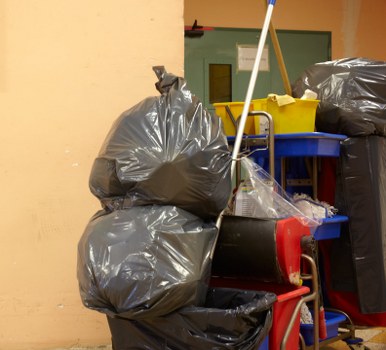
Business waste removal in Dalston needs a practical approach that keeps your premises tidy, your collections organised and your materials moving to the right place. We handle routine commercial clearances for offices, shops, studios and other workplaces, with a focus on separating reusable, recyclable and non-recyclable items where that can be done sensibly. The aim is straightforward: clear business waste without turning the process into a disruption for your team or customers.
Our service covers a wide mix of workplace waste streams, from everyday bagged refuse and packaging to bulkier items that need more careful lifting and sorting. Office furniture, shelving, mixed office rubbish and redundant stock are all commonly part of a commercial clearance. Where items can be processed more responsibly, we keep that in mind while planning the work, so the collection is not just about removal but also about sensible handling.
If you are planning a one-off clearance or setting up a repeat collection pattern, it helps to identify the material categories first and then match the visit to the likely volume. For a clear price discussion, use the pricing information on the site and then request a quotation once you know what needs moving. Business waste should be handled in a way that suits the site, the schedule and the type of material involved.
Commercial waste collections arranged around your premises
Every workplace produces different waste, so the service has to be shaped around the way the premises actually operate. A compact office above a parade of shops may need quiet, tidy collection of paper, cardboard and broken furniture, while a larger unit could need a broader clear-out after refit or consolidation. We work with the material in front of us rather than forcing it into a one-size-fits-all pattern.
Typical items may include desks, chairs, filing cabinets, shelves, monitors, printers, cartons, archived paper, broken fixtures and general mixed waste. Depending on what is present, it may be appropriate to separate streams so that reusable or recyclable items are not mixed unnecessarily. If you already know that a clear-out will involve confidential paperwork or sensitive records, it is worth grouping those items separately before the visit so they can be dealt with in a controlled way.
What a business collection can include
- Routine office rubbish and packaging
- Old desks, chairs and storage units
- Cardboard, paper and mixed recyclable materials
- Redundant stock, fixtures and light fittings
- Selected specialist items where suitable handling is agreed in advance
Office clearances for working spaces and back rooms
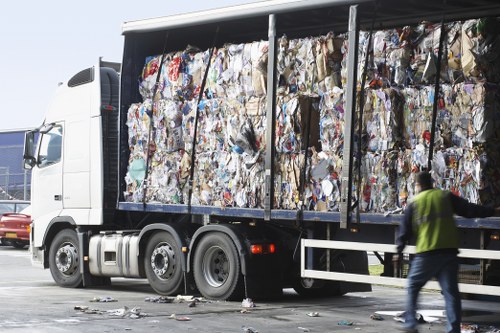
Office clearance is often about creating order without forcing a full shutdown. It may involve removing a few unwanted pieces of furniture, clearing a back room full of surplus items, or taking away a complete suite of redundant office equipment after a move or refurbishment. The work is planned so that access routes stay clear and the site can keep functioning as much as possible while the clearance takes place.
In many offices, there is a difference between items ready for removal and items that still need a final check by staff. Sensitive documents, personal belongings and shared equipment are best reviewed beforehand so nothing useful is removed by mistake. Where printers, computers or monitors are included, the collection should reflect what is suitable for removal and what needs a separate internal process, especially if data-bearing equipment is involved. Clear labelling and a simple room-by-room plan can make a big difference to how smoothly the visit runs.
Office clearance is a useful option when desks, storage and general office rubbish have built up over time and now need a proper reset. It suits businesses that want the workspace cleared methodically, with attention to the practicalities of moving items through corridors, stairwells and shared entrances.
Shop, studio and light commercial waste
Not every business generates the same sort of waste as an office, and smaller commercial spaces often need a more flexible collection. Shops, studios, salons, workshops and similar premises may have a mixture of packaging, display material, damaged fittings, stock packaging and light bulky waste. The right approach is to remove the items that are holding the space back while keeping the rest of the operation manageable.
This kind of work can be especially useful after a delivery cycle, seasonal stock change, layout refresh or end-of-lease tidy-up. The aim is to deal with the waste that no longer serves the business and to keep the remaining space usable. If there are awkward items such as broken counters, loose shelving or mixed waste from a storage area, they can usually be planned into the collection alongside smaller bagged material.
We also pay attention to how waste is presented on site. Items gathered in a single accessible place tend to be quicker to remove than scattered material across several rooms. If you want to simplify the job before a visit, group items by type, keep access paths open and make a short note of anything unusually heavy or fragile. That sort of preparation supports a cleaner, more efficient clearance.
Sorting, reuse and responsible handling

Commercial waste is rarely just one material, so a sensible removal plan considers what can be separated before loading. Cardboard, paper, metal and reusable furniture may all need different treatment. A good clearance does more than empty a room; it gives the material a clearer route to the next stage, whether that is reuse, recycling or disposal. This is especially helpful when a business has accumulated a mixed back-up of ordinary rubbish and still-useful items.
For many customers, the important decision is not only what leaves the building, but how the items are grouped beforehand. If you can identify what is waste, what may be reused internally and what is definitely ready to go, the collection becomes easier to manage. That simple separation can reduce confusion and helps make the visit more orderly. It also means the service can be matched more accurately to the real contents of the site.
Useful preparation before a collection
- List the main item types, such as furniture, packaging or paper waste.
- Set aside anything that must stay on site for records or reuse.
- Keep corridors, lifts and loading points clear where possible.
- Note any awkward access, parking constraints or heavy items.
- Gather a few photographs if you want a more accurate quotation discussion.
Business clearances after moves, refurbishments and changes
When a business relocates, refreshes its interior or reduces the amount of equipment on site, waste removal often becomes part of a bigger transition. That work can involve emptying storage areas, stripping out unwanted office furniture, taking away packaging from a fit-out or removing items left behind after a handover. The service is best used as a practical end stage, helping the premises move from one arrangement to the next.
A clearance after a change in layout can be planned in stages if necessary. Larger items may need to go first so that smaller waste can be gathered safely behind them, or the reverse may suit a cramped store room. What matters is that the removal is shaped to the site rather than forcing the site to suit the clearance. If there are several rooms, it is often useful to agree a sequence in advance so the job has a clear order.
Book online when you are ready to arrange a collection that fits a move, refit or end-of-tenancy handover. If you want to compare likely cost factors first, the pricing pages can help you understand what influences the quotation before you send through the details.
Pricing factors and quotation details

Quotation requests for commercial waste removal usually depend on a few practical things: the volume of material, the type of items, access to the premises and whether the load contains anything that needs separate handling. A small clear-out of office rubbish is very different from a mixed collection including bulk furniture, stacked packaging and awkward fixtures. For that reason, accurate information matters more than broad assumptions.
If you are preparing to ask for a price, it is useful to have a brief inventory ready. Not every enquiry needs a long explanation, but a few details can help set expectations. A room count, a rough item list and any access notes are often enough to start with. Photos can also help where the collection includes mixed contents or bulky items, though they are not a substitute for describing anything unusual. Clear information usually leads to a clearer quotation.
pricing and quotes gives a sensible starting point if you want to understand how the service is priced before you request a figure. Once you have the basics to hand, you can ask for a quotation with confidence and avoid unnecessary back-and-forth.
Confidential materials and controlled removal
Some businesses have waste that cannot simply be mixed with general rubbish, especially when records, client information or sensitive paperwork are involved. In those cases, the clearance needs to respect the nature of the material and the company’s own internal process. That may mean keeping certain items separate, grouping paperwork together or removing only what has already been approved for disposal by the business.
Confidential waste should be treated carefully from the moment it is gathered. If boxes contain mixed papers, old folders or office archives, it helps to mark them clearly so they are not blended with general waste by mistake. The same applies to equipment or storage media that still needs internal checks. A controlled approach protects the business from accidental mixing and keeps the clearance focused on the correct items.
Confidential shredding is relevant when paperwork and records need a more specific handling route than ordinary office waste. It can sit alongside a wider office clearance where the business wants general items removed while sensitive material stays under tighter control.
About Dalston
Dalston is an inner-east London district within the London Borough of Hackney, closely associated with the A10 corridor and the wider network of streets that link Hackney Central, Stoke Newington and Kingsland. Historically part of Middlesex, it developed from a rural settlement into a dense urban area during the nineteenth century, with growth shaped by railway expansion, local industry and the spread of housing for London’s expanding population. The area is known for its mix of older terraces, later apartment blocks and commercial frontages, many of which reflect repeated waves of rebuilding and adaptation rather than a single architectural style. Dalston Junction and Dalston Kingsland are the main rail stations, while buses and cycling routes connect the district with neighbouring parts of Hackney and beyond. The locality has long been associated with trade, migration and cultural change, and that layered history is still visible in the blend of markets, independent businesses, places of worship, converted industrial spaces and newer developments. Gillett Square is one of the best-known public spaces, used for events and everyday foot traffic alike, while Ridley Road Market remains a defining feature of local street life with its long-running reputation for varied produce and trading activity. Nearby green spaces and walking routes add contrast to the busy high-street character, and the area’s character is shaped as much by movement and exchange as by any single landmark. Dalston today remains a compact but varied part of London, with a streetscape that shows both continuity and constant change.
Planning a clearance that fits the site
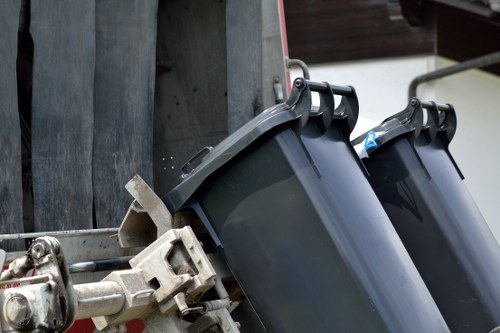
For many businesses, the main challenge is not whether waste can be removed, but how to organise the job without interrupting the rest of the day. That is why the collection plan should match the site’s access, the amount of material and the kind of rooms involved. A tidy, well-defined pile of waste in one place is easier to manage than items spread across storage, stairs and shared corridors, so a little planning can make the visit smoother for everyone involved.
Where possible, separate the material into broad categories before the collection starts. Keep reusable items apart from obvious waste, keep papers away from wet or damaged materials, and note any particularly heavy pieces so they can be handled properly. If the premises have loading restrictions or shared access, mention them at the enquiry stage. Those details help shape a practical collection plan and reduce the chance of surprises on the day. For a straightforward start, prepare a short list and then ask for a quotation.
To arrange business waste removal in Dalston, send over the main details and request a quotation when you are ready. If you prefer to explore the service first, the waste removal and business waste pages offer a helpful overview before you decide how to proceed.