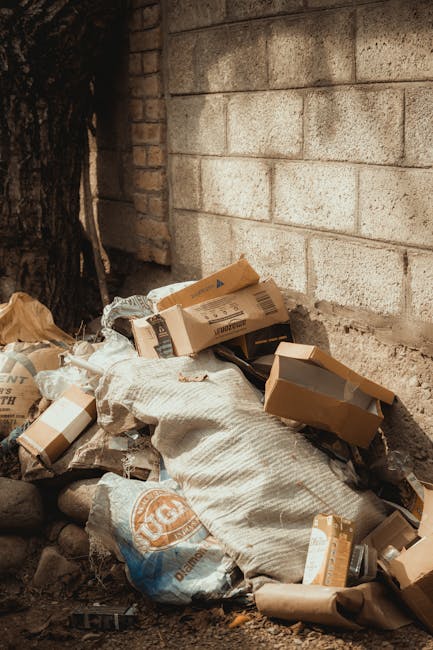
Avoid hidden fees in Dalston rubbish removal quotes: a practical guide for getting honest pricing
If you have ever compared rubbish removal quotes and thought, "That looks fine... but what am I actually paying for?", you are in good company. Hidden charges can turn a straightforward clearance into an awkward, overpriced headache. This guide on how to avoid hidden fees in Dalston rubbish removal quotes is here to help you spot the warning signs early, ask the right questions, and choose a provider with confidence. Whether you are clearing a flat, a shop, a garden, or a single bulky item, the same rule applies: the cheapest quote is not always the cheapest job.
In Dalston, where access can be tight, parking can be tricky, and jobs can range from a quick sofa pickup to a full property clearance, transparent pricing matters even more. Let's make the quote process simple, fair, and a lot less stressful.
Table of Contents
- Why avoiding hidden fees matters
- How rubbish removal quotes usually work
- Key benefits and practical advantages
- Who this is for and when it makes sense
- Step-by-step guidance
- Expert tips for better results
- Common mistakes to avoid
- Tools, resources and recommendations
- Law, compliance, standards and best practice
- Options, methods and comparison table
- Case study or real-world example
- Practical checklist
- Conclusion
- Frequently asked questions
Why Avoid hidden fees in Dalston rubbish removal quotes Matters
Hidden fees do more than bump up the bill. They create doubt. And once you start feeling unsure about a quote, everything else becomes harder: comparing providers, deciding what to book, even trusting the collection window. That is why avoiding hidden fees in Dalston rubbish removal quotes matters from the very start.
In real terms, hidden charges usually show up in one of a few ways: extra labour once the team arrives, surprise disposal surcharges, parking-related costs, access fees for stairs or narrow hallways, or an added minimum charge that was not obvious in the first message. Sometimes the base price is genuine, but the quote is so selective that it leaves out the bits that turn up on the day. Bit sneaky, really.
Dalston brings its own practical challenges too. A job in a top-floor flat off a busy street is not the same as a ground-floor garage clearance. If a provider has not asked about access, waste type, or volume, there is a fair chance the final price could shift. You do not want that surprise when someone is already loading the van.
Expert summary: A good rubbish removal quote should explain what is included, what could change the price, and what would trigger an additional charge. If that clarity is missing, treat the quote carefully.
Clear pricing is not just about saving money. It is about knowing what you are agreeing to before anyone lifts a box.
How Avoid hidden fees in Dalston rubbish removal quotes Works
A transparent quote process usually starts with a simple assessment of three things: what you need removed, how much there is, and how difficult it will be to collect. That sounds basic, but it is the backbone of most honest pricing models.
Some companies will quote from photos, others may prefer a quick phone call, and some offer online booking tools. The best approach is whichever gives enough detail to price the job properly. If the provider only asks for a rough "van load" description, that can be fine for smaller jobs, but you should still expect a clear explanation of what is covered.
The quote should normally clarify whether the price includes loading, labour, transport, disposal, recycling, and VAT if applicable. If parking charges or congestion-related costs could apply, those should be explained before booking. You should not find out about them while the team is standing at the door with the back of the van open. Not ideal.
In practical terms, quote transparency works best when both sides answer the same questions before the job begins:
- What exactly is being removed?
- How much waste is there, and how bulky is it?
- Are there stairs, narrow corridors, or limited parking?
- Is any item hazardous, heavy, or awkward?
- Will the team need to dismantle anything?
- Is the waste mixed, recyclable, or specialist?
If a company is serious about clear pricing, it will usually welcome those details rather than dodge them.
Key Benefits and Practical Advantages
Getting clear, fee-free rubbish removal quotes has a few obvious benefits, and a few that are easy to miss.
1. You can compare providers properly
If one quote includes labour, disposal, and loading while another hides those costs in small print, you are not comparing like with like. Transparent quotes make it much easier to choose on value rather than guesswork.
2. You reduce the risk of awkward disputes
When the price is agreed up front, the collection day tends to go more smoothly. There is less back-and-forth, fewer misunderstandings, and far less chance of that uncomfortable "actually, there's a bit more to pay" moment.
3. Budgeting becomes realistic
Whether you are clearing out a rental, managing an office move, or getting rid of old furniture, you usually need a firm number. A genuine all-in quote helps you budget properly instead of leaving a gap that might grow later.
4. It often signals better service
Providers who are upfront about pricing often tend to be upfront about other things too, like recycling practices, insurance, arrival windows, and what they can and cannot take. That does not guarantee perfection, of course, but it is usually a good sign.
5. It saves time as well as money
The right quote cuts out the endless message chain of "Is that included?" and "What about stairs?" You get your answer earlier, which is a relief when you are juggling a hundred other things.
Truth be told, most people do not mind paying a fair price. What they mind is paying more than they expected for reasons nobody explained.
Who This Is For and When It Makes Sense
This topic matters to almost anyone booking rubbish removal in Dalston, but some people will feel the pinch more than others.
Homeowners and tenants often need clarity when they are clearing clutter before moving, after renovations, or during a big declutter. If you are packing boxes and trying to keep the hallway clear at the same time, hidden extras are the last thing you need.
Landlords and letting agents need predictable costs because void periods, turnaround times, and tenant handovers can all be tight. A surprise fee can throw off a tidy little budget very quickly.
Small businesses, especially offices, shops, and hospitality venues, need proper quotes for everything from a few broken chairs to a full office clearance. If the invoice changes after the work starts, it creates awkward internal questions too. Nobody enjoys explaining that one.
People dealing with bulky or awkward items should be especially cautious. Sofas, mattresses, fridges, wardrobes, and mixed loads can all come with different handling or disposal considerations. That is not a problem in itself. It just needs explaining before anyone turns up.
Anyone with limited access should take note. Think upper-floor flats, no lifts, tight staircases, controlled parking, or rear access only. These factors do not automatically mean extra cost, but they often influence it.
If your job is simple, great. If it is slightly fiddly, even more reason to ask detailed questions.
Step-by-Step Guidance
Here is a simple way to keep rubbish removal pricing clean and transparent from the start.
- Describe the waste clearly. Say what it is, how much there is, and whether it is bulky, heavy, mixed, or fragile. "A few bits" is not as helpful as it sounds.
- Share access details. Tell the provider about stairs, lifts, parking, long walks from the property, or rear access issues. This is often where hidden costs creep in.
- Ask what the quote includes. Loading, labour, disposal, recycling, and VAT should all be clear. If something is not included, ask why.
- Check for minimum charges. Some jobs are priced with a minimum fee. That is normal enough, but it should be stated clearly before you book.
- Ask about difficult items. Hazardous waste, appliances, and unusually heavy furniture can change the price or require a different service. Better to know now than later.
- Request confirmation in writing. A message, email, or booking summary gives you a record of what was agreed. It is a small step, but a useful one.
- Clarify what happens if the load changes. If more items are added on the day, how is that priced? A fair provider will explain the process.
- Compare total value, not just the headline price. The cheapest quote can be the most expensive once extras are added. Funny how that works.
If you are booking online through a service like online booking, the same principle applies: the more detail you provide, the less room there is for confusion later.
And if you want to understand how a provider structures its pricing before you commit, it helps to review the general guidance on pricing and quotes first.
Expert Tips for Better Results
After plenty of quote conversations, a few patterns become obvious.
Use photos, but do not rely on them alone
Photos are useful for volume estimates, especially for furniture or bagged waste. But they can hide stair access, awkward corners, or parking restrictions. A few extra words can save a lot of backtracking.
Be specific about mixed loads
A pile of cardboard, a broken wardrobe, and some garden waste may not look dramatic, but mixed waste can affect sorting and disposal. If a provider knows what is in the load, the quote can be more accurate.
Ask what would count as an additional charge
This is a great question because it forces clarity. You do not need a legal lecture, just a plain-English answer. "What could change the price on the day?" is often the best wording.
Check the time window too
A cheap quote with a vague arrival slot can be frustrating if you are waiting around all afternoon. In our experience, time matters just as much as money when you are trying to keep a day on track.
Do not hide awkward details
If the waste includes a fridge, mattress, or items needing special handling, say so. A few people leave that out because they worry it will increase the price. Usually, it is better to know the real price than to create a problem later. Let's face it, nobody likes surprises in the hallway.
It also helps to choose providers that explain their wider service approach. Pages such as waste removal and recycling and sustainability can give you a better sense of how the business handles disposal, sorting, and responsible processing.
Common Mistakes to Avoid
People often trip up in the same few places. The good news is that once you know them, they are easy to avoid.
- Accepting a quote that is too vague. If it says "subject to inspection" but gives no detail, do not assume the number is fixed.
- Forgetting to mention access issues. A first-floor flat with a narrow stairwell is not the same as a driveway collection.
- Not asking about disposal charges. Some companies separate collection and disposal costs. Others bundle them. You need to know which model you are dealing with.
- Ignoring minimum load rules. A small amount of rubbish can still carry a minimum fee. That is normal, but it should be explained.
- Assuming "cheap" means good value. A low quote that excludes labour or extras is not actually low once the invoice arrives.
- Not checking item restrictions. Certain waste streams need special handling. If you do not mention them, the quote may be incomplete.
- Failing to ask for written confirmation. A quick message or email can prevent a lot of "I thought that was included" moments.
A small extra check at the start tends to save much bigger headaches later. Not glamorous, but useful.
Tools, Resources and Recommendations
You do not need a spreadsheet and a head torch, though some people might enjoy that. A simple system is enough.
A basic quote comparison note
Keep a short note with these headings for each provider: price, what is included, access assumptions, item restrictions, additional charges, and how the booking is confirmed. That makes it much easier to compare offers side by side.
Photos and measurements
Take a few clear photos in daylight if possible. One from the doorway, one close-up of the waste, and one showing access can be enough for an initial estimate. If the job involves furniture or appliances, rough measurements help too.
Service pages worth reviewing before you book
Different jobs have different cost structures, so it helps to look at the service that most closely matches your need. For example, a domestic clearance is not the same as office clearance, and a single-item pickup is not the same as furniture disposal.
If you are clearing a property, you may also find the following useful:
- house clearance
- flat clearance
- garage clearance
- loft clearance
For item-specific jobs, these pages can be handy:
- mattress and sofa disposal
- fridge and appliance removal
- garden clearance
And if your job involves mixed or specialist waste, a provider that offers builders waste clearance or hazardous waste disposal should explain pricing carefully before you proceed.
Law, Compliance, Standards, or Best Practice
When rubbish removal involves money, access to premises, or disposal of waste, good practice matters. In the UK, waste handling should be done responsibly, and legitimate operators should be able to explain how waste is transported, sorted, and disposed of. You do not need to become an expert overnight, but you should expect clear answers.
At a practical level, best practice usually means:
- quoting honestly and clearly
- explaining any extra charges before work starts
- handling waste safely and appropriately
- recycling where possible
- providing insurance and safety information where relevant
If a provider has clear policies on insurance and safety and health and safety, that is a reassuring sign. It shows the business is thinking beyond the immediate pickup.
You may also want to understand how payment is handled before booking. A clear payment and security policy can reduce uncertainty around deposits, card payments, and invoicing.
For households and businesses alike, the main rule is simple: if something affects the price, it should be explained before the job starts. That is fair, sensible, and honestly how it should be.
Options, Methods, or Comparison Table
Not every quote process works the same way. Some methods are better for quick jobs, while others suit larger or more complex clearances. Here is a simple comparison to help you decide what to ask for.
| Quote method | Best for | Pros | Watch out for |
|---|---|---|---|
| Photo-based quote | Standard household items, small clearances | Quick, convenient, easy to send details | Can miss access issues or hidden volume |
| Phone quote | Simple collections, repeat customers, item lists | Fast and direct, good for questions | Depends on how clearly you describe the job |
| Site visit or inspection | Large, awkward, or mixed clearances | Usually the most accurate | Takes more time to arrange |
| Online booking estimate | Routine removals with clear details | Convenient and often efficient | Check what happens if the actual job differs from the estimate |
For a straightforward sofa or mattress removal, an online estimate may be enough. For a full property clearance, especially where access is tight, a more detailed assessment is usually wiser. No mystery there. Well, not much anyway.
Case Study or Real-World Example
Imagine a resident in Dalston clearing a one-bedroom flat after a move. They have a wardrobe, two chairs, a broken chest of drawers, several bin bags, and an old fridge. The first quote looks low, which is encouraging, but it only covers "general waste removal" and does not mention appliance handling, stairs, or parking.
When they ask a few simple questions, the picture changes. The fridge needs separate handling, the building has two flights of stairs, and the street has limited loading space in the afternoon. The quote is revised, but this time it is accurate. Not cheap-cheap. Accurate. And that matters more.
Now compare that with a different provider who asks for photos, confirms the item list, explains the labour charge, and sets out what is included in writing. The second quote may be slightly higher on paper, but the final bill is far more predictable. That is usually the better deal.
This is the pattern you see again and again: the clearest quote often feels a little more detailed at the start, yet it tends to be the least stressful in the end. There is real value in that peace of mind, especially on a moving day when your kettle is packed somewhere you cannot find.
Practical Checklist
Use this checklist before you confirm any rubbish removal booking in Dalston.
- Have I described every item or waste type clearly?
- Have I explained access, stairs, parking, and any lifting concerns?
- Do I know exactly what the quote includes?
- Have I asked about possible extra charges?
- Have I confirmed whether VAT is included, if relevant?
- Do I know how bulky, heavy, or specialist items are priced?
- Have I asked for written confirmation of the quote?
- Have I checked the provider's related services if my job is unusual?
- Am I comparing total value rather than just the lowest headline price?
- Do I feel comfortable that there will not be surprise charges on the day?
If you can tick most of those off, you are in a much stronger position.
Conclusion
Avoiding hidden fees in Dalston rubbish removal quotes is mostly about slowing down for one moment and asking the obvious questions before you book. What is included? What could change the price? What makes this job different from a standard collection? Those questions sound simple, but they are exactly what protects you from awkward surprises.
When a quote is clear, you can plan properly, compare providers fairly, and get the job done without second-guessing every line item. That is worth a lot, especially when you are trying to clear space, finish a move, or just get your place back to normal.
Get a free quote today and see how much you can save.
And if you take only one thing from this guide, let it be this: a fair quote should feel calm, not confusing. That little difference makes all the difference.
Frequently Asked Questions
How do I know if a rubbish removal quote has hidden fees?
Look for vague wording, missing details, or exclusions that are not explained clearly. If the quote does not state what is included, ask directly before booking.
What are the most common hidden charges in rubbish removal?
Common extras include labour surcharges, difficult access fees, parking costs, disposal charges, item-specific handling fees, and minimum load fees. Not every provider uses all of these, but they are worth checking.
Should a rubbish removal quote include disposal costs?
It should be clear whether disposal is included or priced separately. A transparent quote makes that obvious, so you are not left guessing on the day.
Is a cheaper quote always worse value?
Not always, but a low quote can become expensive if key costs are excluded. Compare what is included, not just the headline number.
Do I need to mention stairs and parking when getting a quote?
Yes, absolutely. Access details can affect labour time and loading difficulty, so they are important for an accurate price.
Can I get a fixed price rubbish removal quote?
Often, yes. Fixed quotes are usually possible when the waste type, volume, and access details are clear enough for the provider to assess properly.
What should I ask before accepting a quote?
Ask what is included, what could increase the price, whether VAT is included, how awkward items are handled, and whether the quote will be confirmed in writing.
Are online rubbish removal quotes reliable?
They can be reliable if you give accurate details and photos. For larger or more complex jobs, a more detailed assessment is often safer.
What if the waste amount changes on the day?
Ask the provider in advance how extra items are priced. That way, if the job grows a little, you already know how the cost will be adjusted.
Do I need a specialist service for appliances or heavy items?
Sometimes, yes. Fridges, mattresses, sofas, and other bulky items may need different handling, so it is best to mention them early and check the pricing rules.
Why does rubbish removal pricing vary so much in Dalston?
Local access, parking, waste type, load size, and labour requirements all play a part. Two jobs that look similar at first glance can still cost different amounts.
How can I make sure I am comparing quotes fairly?
Use the same job description for every provider and compare the total included service, not just the starting price. A simple checklist helps a lot here.
What is the safest way to avoid surprise charges?
Be specific, ask direct questions, and get the agreement in writing. That combination prevents most misunderstandings before they become bill problems.